Happy Spring 2026! Fresh season at LBMA
More about Happy Spring 2026! Fresh season at LBMA
Spring 2026 Newsletter
Click here to download the PDF version.
This newsletter was designed for print. For the best reading experience, we recommend viewing the PDF.
Current Exhibitions

Holding Time: The Works of Elyse Pignolet and MyungJin Kim
March 20, 2026 – June 7, 2026

Why Paint a Landscape? Selections from the Permanent Collection
March 20, 2026 – June 7, 2026

Yesterday, Today, Tomorrow: LBUSD High School Exhibition
March 15, 2026 – May 10, 2026

Robert Williams: Fearless Depiction
February 6, 2026 – May 31, 2026
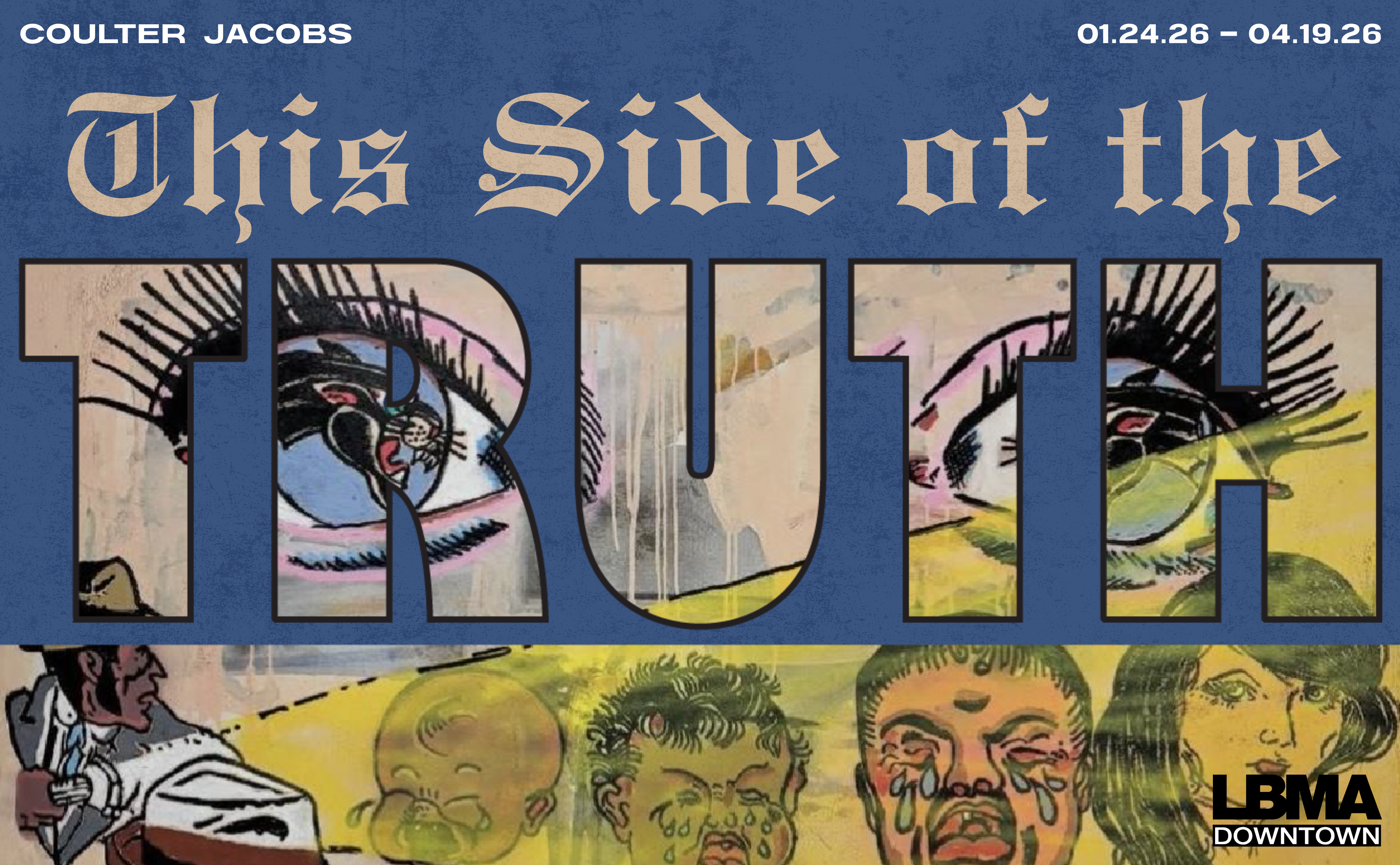
Coulter Jacobs: This Side of the Truth
January 24, 2026 – April 19, 2026
Upcoming


• June 13, 2026: LBMA Uncorked! - An evening in support of LBMA education & exhibition programs.
• June 26, 2026: Positive Fragmentation: From the Collection of Jordan Schnitzer and His Family Foundation
• May 16, 2026: Scott Carrillo Azevedo: The American Home – A Broken Promise
• May 31, 2026: Imagine This: LBUSD Elementary Exhibition
What the Universal Charitable Deduction Means for You
Beginning in 2026, a meaningful change in tax law may make charitable giving more accessible—and more impactful—for many of our supporters. The newly enacted “universal charitable deduction” allows taxpayers who take the standard deduction to receive a tax benefit for their charitable contributions, expanding an incentive that was previously limited to those who itemize.
Under this provision, individuals may deduct up to $1,000 in qualified charitable donations, while married couples filing jointly may deduct up to $2,000, even if they do not itemize. Because nearly 90% of taxpayers use the standard deduction, this change opens the door for millions of households to make tax-advantaged gifts for the first time.For donors, this creates a simple and rewarding opportunity: support the arts while also reducing taxable income. Just as importantly, the deduction resets each year, encouraging consistent, annual giving rather than one-time contributions.
For the Long Beach Museum of Art, this shift represents an exciting opportunity to deepen engagement with our community. Smaller, recurring gifts—whether monthly or annual—can now carry both personal and financial benefits for donors. Over time, these contributions help sustain exhibitions, educational programs, and cultural initiatives that enrich our region.
While the tax benefit is a welcome addition, the heart of giving remains unchanged. Every donation, regardless of size, plays a vital role in advancing our mission to bring art and creativity to our community.
As you consider your charitable plans in the coming year, this new deduction offers another reason to participate. Together, we can build a broader, more inclusive culture of giving—one that ensures the arts continue to thrive for generations to come. — Donita Joseph, CPA, MBT, LBMA Advisory Board
Meet Me at the Museum
Recently I enjoyed reading a warmhearted novel recommended to me by my fellow docent and friend Lorri Stein. As you might imagine, the title—Meet Me at the Museum—captured my attention right away.
As I turned the final page of the book I reflected upon how important the Long Beach Museum of Art has been to me as a welcoming place to host family, friends and visitors from far and near. With its welcoming staff, its magnificent oceanfront location, its inspiring art and creative cuisine, LBMA is certainly an asset to our community that we can be proud to show off.
When our son and daughter-in-law married eleven years ago at a destination wedding, we held a beautiful Claire’s-catered reception in the museum’s Anderson House upon the newlyweds’ return. It felt just like home but without the hassle and I wouldn’t have wanted to hold this important occasion anywhere else.
My Texas sister and brother-in-law who are serious foodies are picky in particular about their chilaquiles and when they visit, they always want to brunch at Claire’s. They’ve repeatedly declared the ones they have eaten there as among the best they’ve ever had. And our other brunch and lunch guests constantly rave about the food and service.When our church holds its annual auction, we offer a guided museum tour by yours truly and lunch at Claire’s for a table full of Orange County guests and the event consistently attracts some of the highest bids in the auction. We’ve never had a bad experience.
How often do you reach out to friends, family and out-of-town visitors to ask them to meet you at the Museum? Think about what an impact all of us as members and friends of the Long Beach Museum of Art could have on the organization’s success if we put LBMA at the top of our priority list of places to host guests. The guests you bring to “sample” what we have to offer could be the new museum members and advocates of tomorrow. — Linda Spery, Docent Council
Why Paint a Landscape?
In his book To See Is to Think: Looking at American Art, Joshua Taylor asks, “Why paint a landscape?” At first, the answer appears simple. However, throughout the long history of art, painting a landscape for its own sake—rather than just as a background for another subject— is relatively recent. Among the landscape paintings in the Museum’s permanent collection, several responses to Taylor’s question emerge, indicating motivations that go far beyond just pleasant wall decoration.
One reason artists painted landscapes was to “lose oneself in nature.” Maurice Braun, a Southern California plein air painter and Impressionist, founded the San Diego Academy of Art in 1912 and served as its director for many years. He encouraged his students to travel and paint outdoors. By celebrating California’s sunlight, Braun aimed to express the spiritual connection between humans and the natural world.
Other artists painted landscapes as acts of remembrance. These could depict specific places that were visited and valued, such as Astrid Preston’s Lotus Land, a painting of Ganna Walska’s 37-acre Lotusland gardens in Montecito.
Agnes Pelton—associated with the Transcendental Painting Group in the Southwest and best known for her abstract work— also found a market for desert landscape scenes, like Bloom in the Desert, among travelers visiting the deserts of Southern California.
Artists also exercised our perception by painting landscapes that are intellectually ordered, revealing nature’s underlying forms and beauty, as in Clara G. Force’s San Jacinto. In contrast, some works rely on insight rather than reason, reminding viewers of humanity’s humility before the power of nature, such as Pat Berger’s Approaching Storm.
Adding sculpture to this exhibition further deepens our connection with nature, as seen in the dialogue between Rhythm in Space and Tahoe Sunset through the Trees. Here, we find ourselves between mountains and sea. What do you see— and can you imagine yourself within one of these landscapes?
— Sue Ann Robinson, Curator Emerita


